Solar Panel Lifespan: How Long Do They Last?

Have you ever stood in your backyard, looked up at a neighbor’s roof covered in shiny solar panels, and wondered how long those things will actually keep working? You’re not alone.
If you’re thinking about a residential solar installation or already have a system humming along, understanding solar panel lifespan is one of the smartest moves you can make.
Modern panels do not just sit up there collecting dust. They deliver clean power for decades, often turning into a reliable source of solar energy savings that pays for itself many times over.
The short answer? Your solar panels will likely keep producing meaningful electricity for 25 to 30 years or more.
But the full story gets even better once you dig into the details. Let’s walk through exactly what to expect so you can feel confident about your investment.
Understanding the Real Solar Panel Lifespan Today
Solar panels do not have an on-off switch that suddenly quits after a set number of years. Instead, they experience a slow, predictable drop in performance called degradation.
This gradual change happens because of everyday exposure to sunlight, heat, and weather. But thanks to huge improvements in manufacturing, today’s panels hold up remarkably well.
What Is the Average Solar Panel Lifespan?
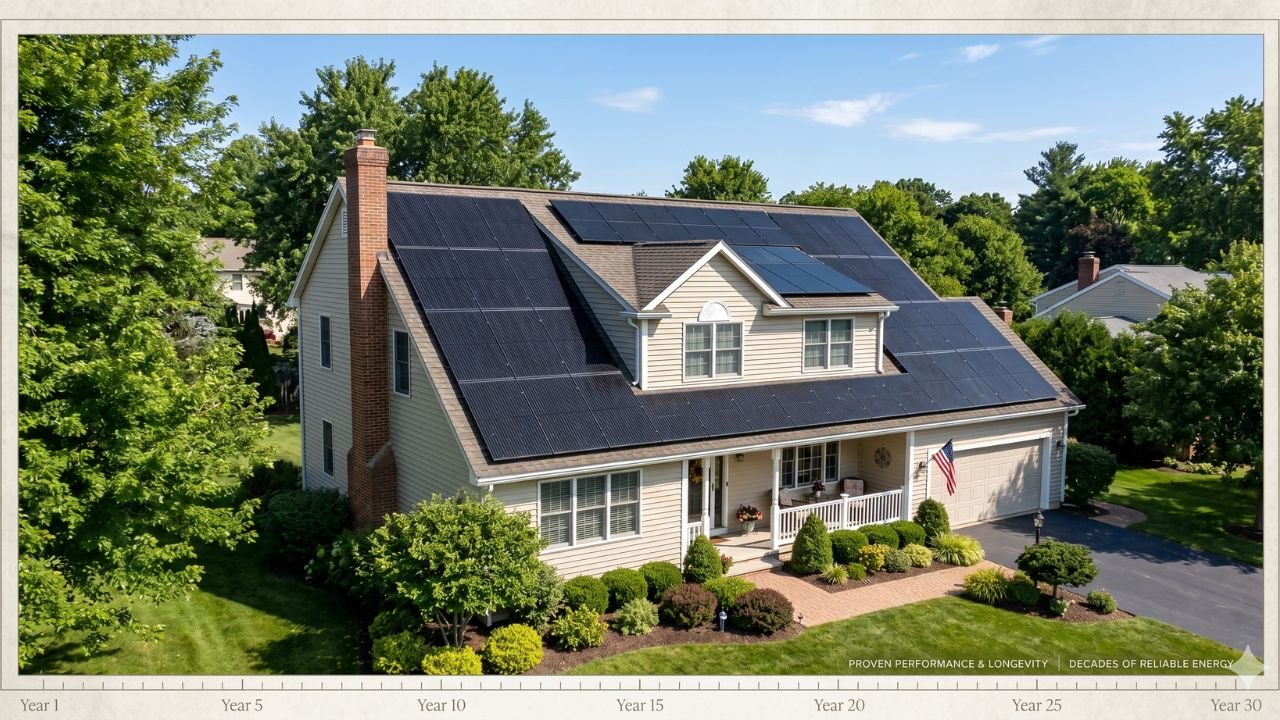
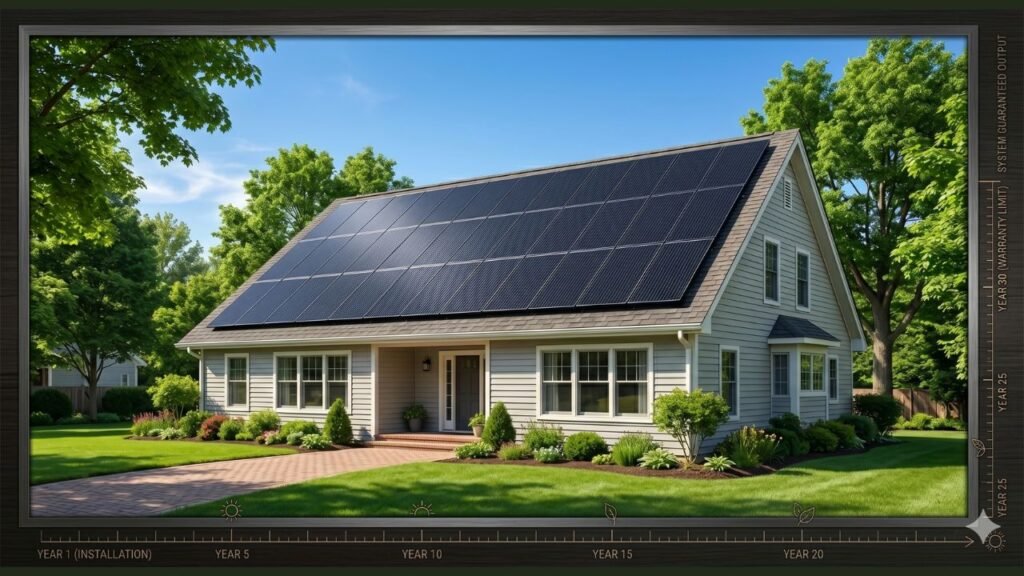
Most experts put the useful lifespan of solar panels at 25 to 30 years. That is the period when they produce enough power to make economic sense for most homes and businesses. After that, they keep working, just at a slightly lower output.
Many systems installed in the late 1990s or early 2000s are still going strong today, often hitting 35 or even 40 years with solid performance.
Real-world data backs this up. Studies show that high-quality panels frequently exceed their warranties and keep delivering value long after the 25-year mark.
One homeowner in Texas installed his system back in 2008. Nearly 18 years later, it is still cutting his monthly electric bill by about 70 percent. He replaced the inverter once, but the panels themselves have barely skipped a beat.
How Solar Panel Degradation Affects Performance Over Time
Degradation is the natural process where panels lose a tiny bit of efficiency each year. The good news is that the rate is much slower than many people assume.
On average, modern panels lose about 0.5 percent of their output per year. Premium models can drop as little as 0.3 percent annually.
Here is a quick look at what that means in practice:
| Years in Service | Typical Panel Output Remaining | Premium Panel Output Remaining |
|---|---|---|
| 10 | 95% | 97% |
| 20 | 90% | 94% |
| 25 | 87-90% | 92% |
| 30 | 82-85% | 89% |
These numbers come from large-scale testing by organizations like the National Renewable Energy Laboratory. Even at 30 years, your system can still generate plenty of free electricity. That slow decline is why solar panel lifespan feels more like a marathon than a sprint.
Key Factors That Influence Solar Panel Lifespan
Not all panels age the same way. Several things can speed up or slow down degradation. Here are the big ones:
- Panel quality and technology: Monocrystalline panels usually outperform older polycrystalline types when it comes to long-term solar panel efficiency.
- Installation quality: A sloppy residential solar installation can lead to hotspots, loose connections, or poor airflow, which shortens life. Always work with certified pros.
- Local climate: Extreme heat, hail, heavy snow, or salty coastal air can accelerate wear. Panels in milder areas tend to last longer.
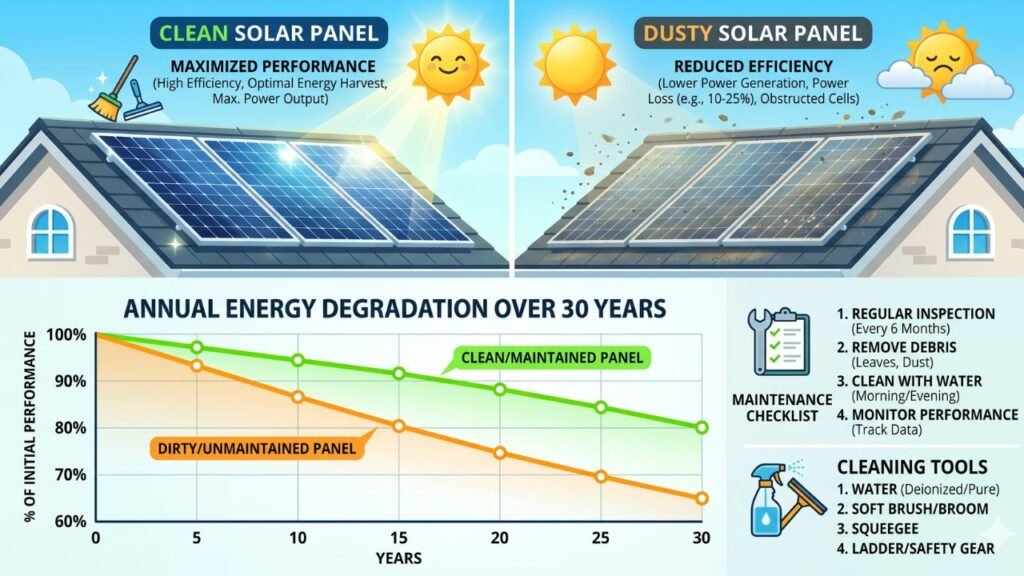
- Maintenance habits: Dirt, bird droppings, or fallen leaves block sunlight and make panels work harder.
- Inverter lifespan: The inverter that converts DC power to AC usually needs replacement every 10 to 15 years, but the panels themselves keep going.
Solar Panel Warranties: Your Built-in Protection
Every reputable panel comes with two main warranties. The product warranty covers manufacturing defects and usually lasts 10 to 25 years. The performance warranty is what most homeowners care about. It guarantees that your panels will still produce at least 80 to 92 percent of their original output after 25 or 30 years.
If output falls below the promised level, the manufacturer steps in to fix or replace panels. That safety net gives you confidence that your solar energy savings will keep rolling in.
Real-World Examples of Long-Lasting Solar Systems
Look at some older installations from the 1980s and 1990s. Many of those early panels are still producing over 80 percent of their original power after 30-plus years.
These success stories prove that solar panel lifespan is not just marketing hype. It is backed by decades of real performance data.
In sunny parts of the Southwest, commercial arrays from the early 2000s continue to power factories and warehouses with minimal drop-off.
Homeowners in the Northeast tell similar stories, even with cold winters and snow. The panels just keep working, quietly lowering utility bills year after year.
Simple Tips to Maximize Your Solar Panel Lifespan
You do not need to be a solar expert to keep your system healthy. A few easy habits can add years of strong performance:
- Clean your panels twice a year or after big dust or pollen seasons. A gentle hose rinse is often enough.
- Trim nearby trees to prevent shading and falling debris.
- Schedule an annual professional inspection to catch loose wiring or minor damage early.
- Monitor your system’s output through the app that came with your inverter. A sudden drop usually signals an easy fix.
These steps protect your investment and help maintain peak solar panel efficiency for decades.
The Financial Payoff of a Long Solar Panel Lifespan
Think about it this way. A typical 6-kilowatt residential system might cost $15,000 to $20,000 after incentives. Over 25 years, that investment often pays for itself in 6 to 8 years through lower bills and federal tax credits. The remaining 17-plus years are pure profit in the form of free electricity.
Longer solar panel lifespan means even bigger returns. Many owners report lifetime savings well over $50,000. Plus, you reduce your carbon footprint every single day. That is a win for your wallet and the planet.
For the latest government insights on photovoltaic system performance, check out the resources at energy.gov. They offer practical guides that line up perfectly with what we see in real installations.
How Does Solar Panel Lifespan Compare to Other Home Upgrades?
Unlike a new roof or HVAC system that might need replacing every 15 to 20 years, solar panels keep delivering value longer than most major home improvements. Their low maintenance and steady output make them one of the best long-term upgrades you can choose.
FAQs About Solar Panel Lifespan
How long do solar panels typically last?
Most solar panels have a useful lifespan of 25 to 30 years, with many continuing to produce power effectively for 35 years or longer. The gradual degradation rate of about 0.5 percent per year means they stay productive far beyond the warranty period.
Will my solar panels still work after the 25-year warranty ends?
Absolutely. Warranties guarantee a minimum output, but real-world performance often stays higher. Many systems keep generating 80 percent or more of their original power well into their 30s, so you can expect continued solar energy savings.
What is the easiest way to extend solar panel lifespan?
Regular cleaning, annual inspections, and proper installation are the top ways to protect your system. Simple habits like keeping panels free of debris and trimming shading trees can add years of reliable performance and better efficiency.
Solar panel lifespan gives you decades of clean, low-cost energy if you choose quality components and stay on top of basic care. Whether you are planning your first residential solar installation or just curious about an existing system, the numbers are on your side. The technology has come so far that panels installed today will likely outlast your mortgage and keep saving you money long after.
Disclaimer: This article is for informational purposes only and does not constitute professional financial or technical advice. Solar panel performance can vary based on location, system design, and maintenance. Always consult a licensed solar professional and review current incentives before making decisions. Data reflects industry averages as of 2026.