How to Get Solar Panels Azimuth and Declination Right?

Are you wondering how to get your solar panels azimuth and declination set just right? If you’re a homeowner or small business owner thinking about residential solar installation, these two angles can make or break your system’s performance.
Getting them wrong might slash your solar energy savings by up to 35 percent. But don’t worry. I’ll walk you through everything in simple steps so you can maximize efficiency without the headache.
At Solar Panel Insights, we love sharing practical advice that turns solar dreams into real-world wins. Whether you’re in sunny California or somewhere with variable weather, understanding azimuth and declination helps your panels soak up every possible ray.
Now, let’s dive into why these angles matter so much for your setup.
Why Getting Azimuth and Declination Spot On Matters for Your Solar Setup
Solar panels work best when they face the sun directly as much as possible throughout the day and year. That’s where azimuth and declination come in. Nail these, and you’ll boost your solar panel efficiency, cut electricity bills, and enjoy faster payback on your investment.
Think about it. A neighbor of mine switched to solar last year. He ignored the declination adjustment on his compass and ended up with panels facing slightly off true south. His system produced 20 percent less power than expected.
Once he fixed it, the extra savings paid for his new EV charger in months. Stories like this show how small tweaks deliver big solar energy savings.
In the Northern Hemisphere, which covers most of the US, panels usually perform best facing true south. Miss that sweet spot, and you lose free energy every single day. But with the right approach, you can avoid common pitfalls and set your system up for long-term success.
What Exactly Is Solar Panel Azimuth?
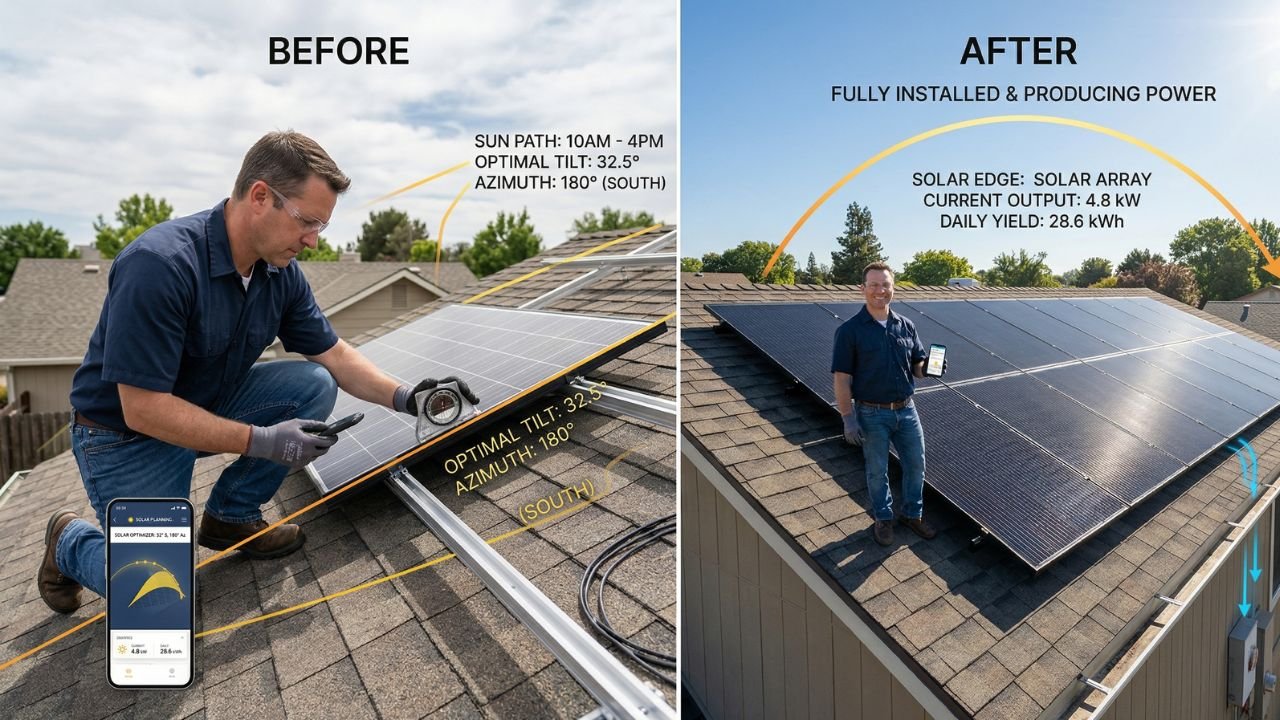
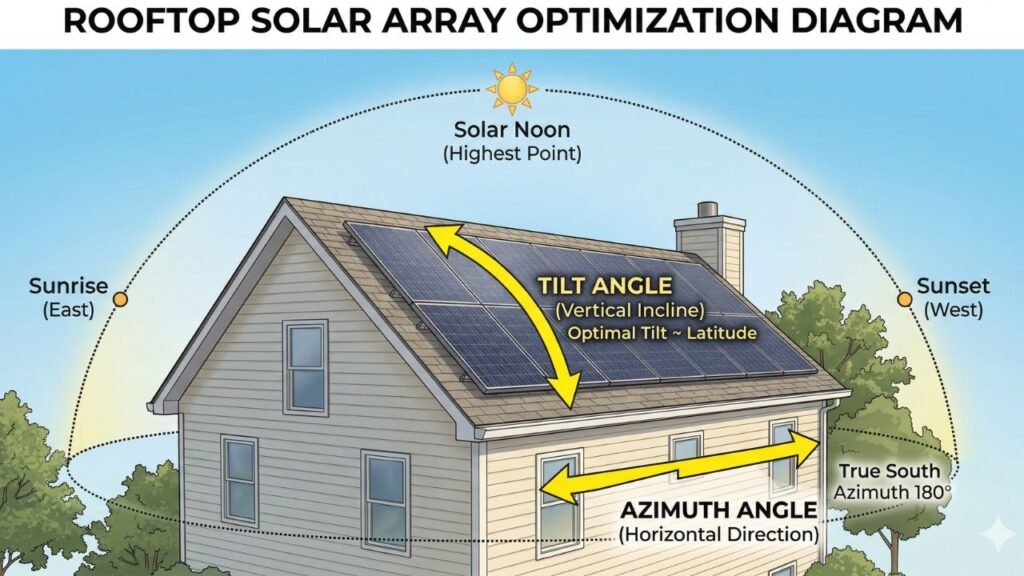
Azimuth refers to the horizontal direction your solar panels face. Imagine standing on your roof and pointing due south. That’s the ideal azimuth angle of 180 degrees in the US. It measures clockwise from true north, so east is 90 degrees and west is 270 degrees.
Why true south? Because the sun tracks across the southern sky in our part of the world. Facing that direction captures the most sunlight from sunrise to sunset. For east- or west-facing roofs, you might still go solar, but expect lower output.
Many homeowners ask if their quirky roofline will work. The good news? Modern inverters and panel tech make even non-ideal azimuth setups profitable in sunny spots.
Understanding Declination: Magnetic vs. Solar Types
Here’s where things get interesting. Declination isn’t one simple thing when it comes to solar panels. Most people mean magnetic declination when setting azimuth.
A compass points to magnetic north, not true north. The difference, called magnetic declination, can be several degrees depending on your location.
For example, in parts of the eastern US, you might subtract a few degrees from your compass reading to hit true south. Out west, you often add it. Skip this step, and your whole array points off course. NOAA offers a free online calculator to find your exact magnetic declination in seconds.
Then there’s solar declination. This is the sun’s position north or south of the equator, changing daily between plus and minus 23.45 degrees. It explains why summer days feel longer and why your panels produce differently by season. You don’t “set” solar declination on your panels, but understanding it helps predict performance and decide on adjustable tilts.
How Tilt Angle Ties Into Declination and Performance
While declination often points to the magnetic correction, your panels also need the right tilt angle from the ground. Think of tilt as the vertical counterpart to azimuth. A simple rule of thumb? Set tilt equal to your latitude for year-round balance.
In Denver at about 40 degrees north, a 40-degree tilt works great. Near the equator, flatter panels shine. For seasonal tweaks, many folks crank the tilt up 15 degrees in winter to catch low-hanging sun or lower it in summer. This ties directly back to solar declination changes.
Step-by-Step: How to Measure and Set Azimuth and Declination for Your Panels
Ready to get hands-on? Here’s exactly how to determine and apply azimuth and declination during residential solar installation or a DIY check.
- Find your exact location details. Grab your latitude and longitude from Google Maps or a GPS app. This is your starting point for tilt and declination lookups.
- Calculate magnetic declination. Head to the NOAA website and plug in your address. Note the value. For instance, if it’s +10 degrees east, add that to your compass heading to reach true north.
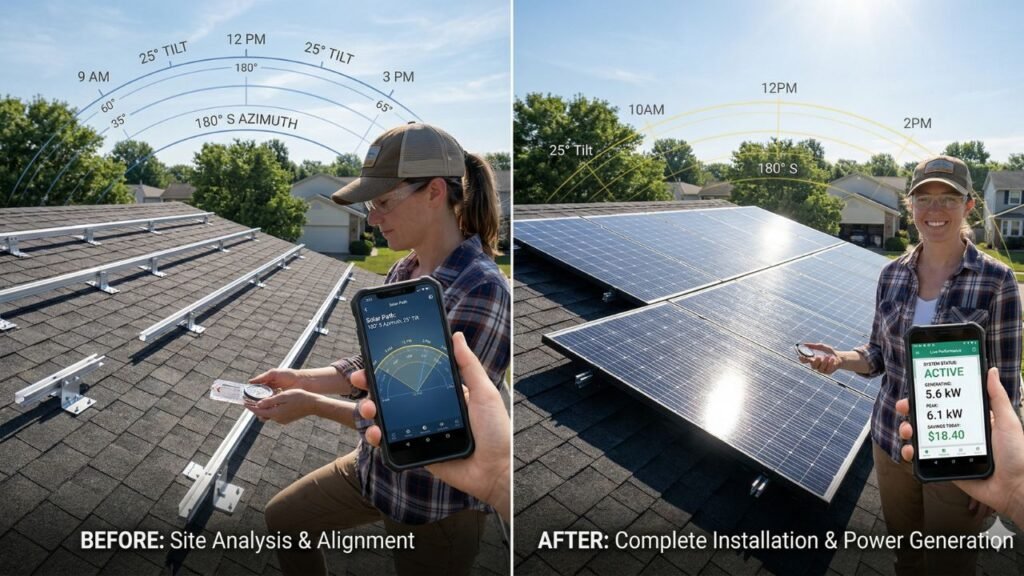
- Measure azimuth with a compass or app. Stand on the roof facing the proposed panel direction. Use a quality compass adjusted for declination. Many free smartphone apps like Compass or Sun Surveyor overlay the sun’s path right on your camera for instant feedback.
- Determine optimal tilt. Use your latitude as the base. Online calculators from NREL or PVWatts let you simulate different tilts and see projected solar energy savings. Aim for panels perpendicular to the sun at noon on average days.
- Verify with tools. A digital inclinometer or even your phone’s level app measures tilt accurately. For existing setups, you can check current angles and adjust mounts if needed.
These steps take maybe an hour but pay off for decades. Pro installers follow them too, but knowing the process empowers you to ask the right questions.
| Location Example | Optimal Azimuth (True South) | Recommended Tilt (Degrees) | Expected Annual Boost from Correct Angles |
|---|---|---|---|
| Los Angeles, CA | 180° | 34° | Up to 25% more output |
| New York, NY | 180° | 41° | 15-20% savings on bills |
| Chicago, IL | 180° | 42° | 30% efficiency gain |
| Miami, FL | 180° | 26° | 10-15% extra energy |
This quick table shows how tweaking azimuth and declination pays off across the country. Your local numbers will vary slightly, but the pattern holds.
Tools and Resources to Make It Easy
You don’t need fancy equipment. Free tools like the NREL PVWatts calculator let you input your address, tweak azimuth and tilt, and see instant solar energy savings estimates. It’s perfect for homeowners planning ahead.
For on-site work, try apps like Solar Pathfinder or the “Optimal Tilt” tool on your phone. They use your location and camera to visualize the sun’s path year-round. If you’re linking to authoritative info, check energy.gov for federal solar incentives that reward efficient setups.
One more tip: shading matters too. Even perfect angles fail if trees block midday sun. Use the same apps to map shadows before you commit.
Common Mistakes to Avoid With Azimuth and Declination
Plenty of folks forget magnetic declination and end up with panels 5 to 10 degrees off. Others set tilt for summer only and suffer in winter. Or they ignore local weather patterns. A quick double-check saves headaches later.
If your roof faces east or west, don’t panic. Bifacial panels or optimizers can still deliver solid results. The key is running the numbers first.
Real-World Benefits of Getting It Right
When you nail solar panel azimuth and declination, everything improves. Higher efficiency means more power for your home or business.
Lower bills. Bigger tax credits under current US programs. And peace of mind knowing your system works as hard as it can.
My neighbor? After fixing his setup, he now powers his entire house plus sells excess back to the grid. You could do the same.
Advanced Tips for Seasonal Adjustments
Some systems let you change tilt twice a year. In spring and fall, reset to match shifting solar declination. This can squeeze out an extra 5 to 10 percent production.
If you’re handy, adjustable mounts make it simple. Otherwise, fixed mounts at latitude still deliver excellent year-round results.
For businesses with larger arrays, tracking systems follow the sun automatically and handle declination changes without manual work. But for most homeowners, fixed setups with smart angles offer the best value.
FAQs About How to Get Solar Panels Azimuth and Declination Right
How Does Wrong Azimuth Affect My Solar Panel Efficiency?
Getting azimuth wrong reduces daily exposure. A 30-degree offset can cut output by 15 percent or more. Always aim for true south in the US after declination correction.
Can I Use a Regular Compass for Solar Panel Azimuth Without Declination Adjustment?
No, a plain compass gives magnetic north. You must adjust for local magnetic declination using NOAA tools. Skipping this leads to noticeable energy losses over time.
What Tools Help Calculate Solar Declination and Optimal Tilt at Home?
Free online calculators from NREL or apps like PVWatts handle it all. Just enter your zip code for instant recommendations tailored to your location and goals.
Getting your solar panels azimuth and declination dialed in is one of the smartest moves you can make for clean energy. It boosts performance, stretches your dollars further, and brings you closer to energy independence. Whether you’re just exploring residential solar installation or tweaking an existing array, these angles are your secret weapon.
Disclaimer: This article provides general educational information based on standard solar practices and is not a substitute for professional installation advice. Always consult a licensed solar expert and local regulations for your specific situation. Incentives and rules can change, so verify current details with official sources like energy.gov.