How Much Energy Do Solar Panels Produce Per Day in 2026?

Hey there, solar curious friend. If you have ever looked up at your roof on a sunny afternoon and asked how much energy do solar panels produce per day, you are thinking like a true energy saver. The answer is not a one-size-fits-all number, but it is easier to figure out than you might think.
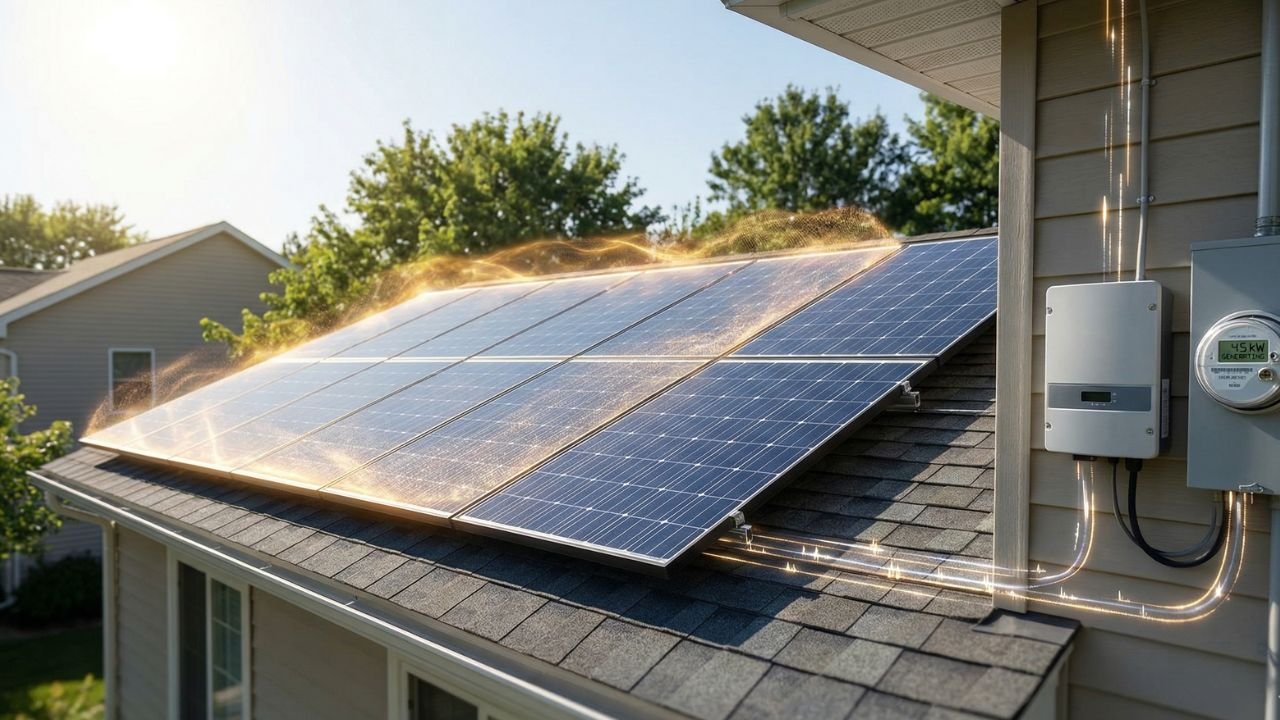
On average, a standard 400-watt residential panel cranks out about 1.6 to 2.5 kilowatt-hours of electricity each day in the United States, depending on where you live and a few other factors. That adds up fast when you have a full system on your house.
Here at Solar Panel Insights, we break this down in plain English so you can see exactly what your own setup might deliver.
Whether you are eyeing a residential solar installation for your home or business, knowing your daily solar energy production helps you calculate solar energy savings and decide if it is the right move.
We will walk through the numbers, share real examples, and give you tips to get the most from every sunbeam. Stick with me, and by the end you will have a clear picture for your situation.
Breaking Down Your Solar Panel Daily Energy Production
Let us get right to the heart of it. Solar panels do not just sit there soaking up rays. They convert sunlight into usable electricity, and the amount they produce each day comes down to a few key things you can actually control or predict.
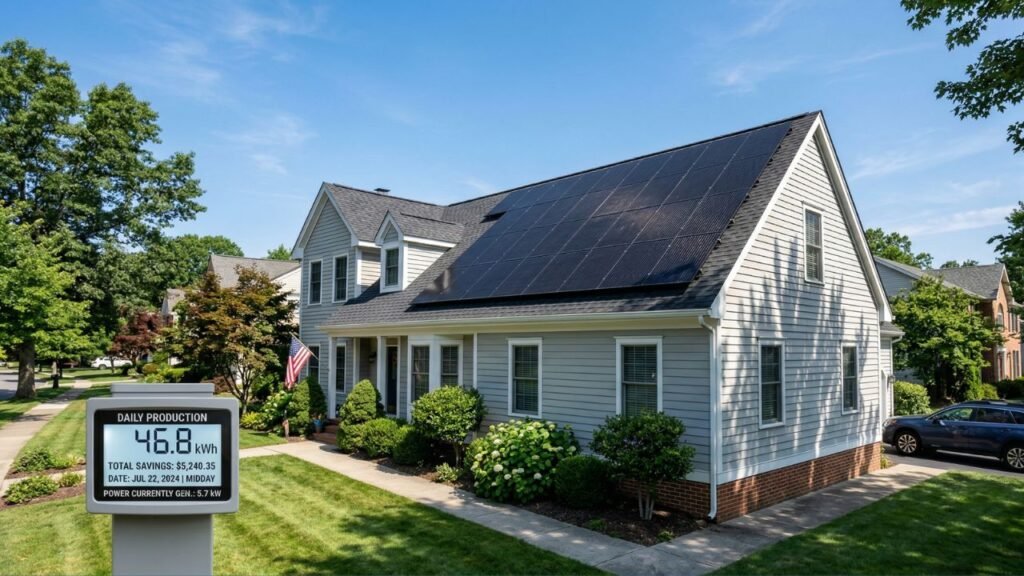
I remember chatting with a neighbor last summer who installed his system and watched his daily output hit 35 kilowatt-hours on a good day. It blew his mind, and it can do the same for you once you understand the basics.
The big picture starts with your panel’s wattage rating. Most modern home panels sit between 350 and 450 watts under perfect lab conditions. But real life is not a lab, so we factor in how many hours of strong sunlight you actually get.
That is where peak sun hours come in. Across the US, the national average is around four to five peak sun hours per day. In sunnier spots like Texas or Arizona, you might see five to six, while cloudier northern areas get closer to three or four.
Key Factors That Shape Daily Solar Output
Several things tweak how much energy do solar panels produce per day. First, solar panel efficiency matters a ton. Today’s top panels reach 20 to 23 percent efficiency, meaning they turn a bigger chunk of sunlight into power than older models.
Heat can reduce output too. On a scorching Texas afternoon, panels might lose 10 to 15 percent of their peak performance, but smart designs handle that well.
Shading from trees or nearby buildings cuts production fast. Even a little shade in the morning or afternoon can drop your daily total by 20 percent or more. Roof tilt and direction play a role.
South-facing panels at the right angle usually win in most of the country. Dirt, dust, or bird droppings? They sneak in and steal a few percentage points until you clean them off.
Weather obviously changes things day to day. A clear summer day gives you more than a cloudy winter one. But over a full year, the averages smooth out nicely for planning your residential solar installation.
Easy Formula to Calculate Your Own Daily Production
You do not need a PhD to run the numbers yourself. Here is the simple formula pros use every day:
Daily energy (in kWh) = Panel capacity (in kW) × Peak sun hours × System efficiency (usually 0.75 to 0.85 to account for real-world losses)
Take a single 400-watt panel, or 0.4 kW. In a spot with five peak sun hours and 80 percent overall efficiency, you get 0.4 × 5 × 0.8 = 1.6 kWh per day.
Scale that up to a full 8-kilowatt home system, and you are looking at 32 kWh daily in the same conditions. That covers most of an average US household’s 30-kilowatt-hour daily use.
Want to get fancy? Online calculators from trusted sites like energy.gov let you plug in your zip code for hyper-local estimates. They pull real weather data so you see month-by-month projections.
Real-World Examples Across the US
Numbers come alive when you see them in action. Let us look at what typical systems deliver in different spots. I pulled these from 2026 installer data and homeowner reports to keep things fresh and real.
Here is a handy table comparing daily output for common system sizes:
| System Size | Sunny Location (e.g. Texas, 5.5 peak hours) | Average US (4.5 peak hours) | Northern Area (3.5 peak hours) | Estimated Monthly kWh |
|---|---|---|---|---|
| 6 kW | 24–28 kWh/day | 19–22 kWh/day | 15–18 kWh/day | 570–840 |
| 10 kW | 40–47 kWh/day | 32–38 kWh/day | 25–30 kWh/day | 960–1,410 |
| 14 kW | 56–66 kWh/day | 46–54 kWh/day | 35–42 kWh/day | 1,350–1,980 |
A family in Dallas with a 10-kilowatt setup often sees 42 kilowatt-hours on a typical spring day. That is enough to run the fridge, AC, lights, and even charge an EV overnight.
Up in Chicago, the same system might hit 32 kilowatt-hours, still a huge dent in bills. These figures already fold in solar panel efficiency losses and typical maintenance.
Seasonal swings happen too. Summer days in most places boost production by 20 to 30 percent over winter. But even in December, Texas panels keep humming because of those clear skies.
How This Ties Into Your Solar Energy Savings
Once you know your daily output, the savings math gets exciting.
If your utility charges 15 cents per kilowatt-hour, a system making 35 kilowatt-hours a day saves you about $5.25 daily, or over $1,900 a year. Over 25 years, that is serious money, especially with rates climbing nationwide.
Many folks pair panels with batteries to store extra daytime power for evening use. That way you maximize every kilowatt-hour and skip expensive peak rates.
Tips to Boost Your Daily Solar Panel Output
You want every panel working at its best, right? Here are proven ways to squeeze more energy out of your residential solar installation:
- Choose high-efficiency panels rated for your climate.
- Get a professional shading analysis before install.
- Opt for microinverters or power optimizers to handle partial shade.
- Clean panels twice a year, especially after pollen season or dusty spells.
- Consider adding battery storage for round-the-clock use.
- Track production with a simple app so you spot issues fast.
Small tweaks like these can add 10 to 20 percent more daily energy without extra panels.

What About Seasonal and Weather Variations?
Daily production is not flat. Rainy weeks drop output, but most systems still deliver 60 to 80 percent of average even then.
Snow? It actually reflects extra light once it slides off. And in 2026, newer panels shrug off heat better than ever, so Texas summers stay productive.
For businesses, larger arrays scale beautifully. A small shop with a 20-kilowatt system can produce 80-plus kilowatt-hours on peak days, slashing commercial electric bills and qualifying for extra incentives.
Choosing the Right System Size for Your Needs
Start by pulling your last 12 months of electric bills. Average your daily use, then size your system to cover 80 to 100 percent.
Most US homes need 6 to 12 kilowatts. Your local installer will run a free assessment and show projected daily output tailored to your roof.
Do not forget maintenance is minimal. A quick visual check every few months keeps things humming. Warranties now stretch 25 years on power output, so you know your daily production will stay strong.
Why Accurate Daily Production Numbers Matter for Your Decision
Understanding how much energy do solar panels produce per day takes the guesswork out of going solar. You see the direct link to lower bills, energy independence, and even higher home value.
Buyers often pay a premium for homes with proven solar setups because they love those predictable solar energy savings.
The key is matching your location’s sun to the right equipment. With prices lower than ever and technology sharper, 2026 is prime time to explore.
Ready to run your own numbers? Grab last month’s bill and try the formula above. Or reach out to a trusted local pro for a custom quote. Your roof could start paying you back every single day.
FAQs About How Much Energy Do Solar Panels Produce Per Day
How much energy does one solar panel produce per day?
A typical 400-watt panel generates 1.6 to 2.5 kilowatt-hours daily in the US. Sunny areas push toward the high end, while cloudier spots land lower. Multiply by the number of panels in your system for the full picture.
Does my location change how much energy solar panels produce per day?
Yes, peak sun hours make a big difference. Texas or the Southwest might deliver 50 percent more daily output than the Northeast. Check local data or use a zip-code tool for your exact average.
How does daily solar production affect my electric bill and savings?
If your system covers your daily home use of 25 to 35 kilowatt-hours, you could slash bills by 70 to 100 percent. Track it monthly to watch the solar energy savings stack up fast.
Solar power keeps getting better, and knowing your daily output is the first step to owning it. Thanks for reading at Solar Panel Insights. We are here with more practical tips whenever you need them.
Disclaimer: This post shares general information based on current 2026 data and is not financial, tax, or legal advice. Actual production varies by location, weather, equipment, and maintenance. Always consult a qualified solar professional and your utility for personalized details.