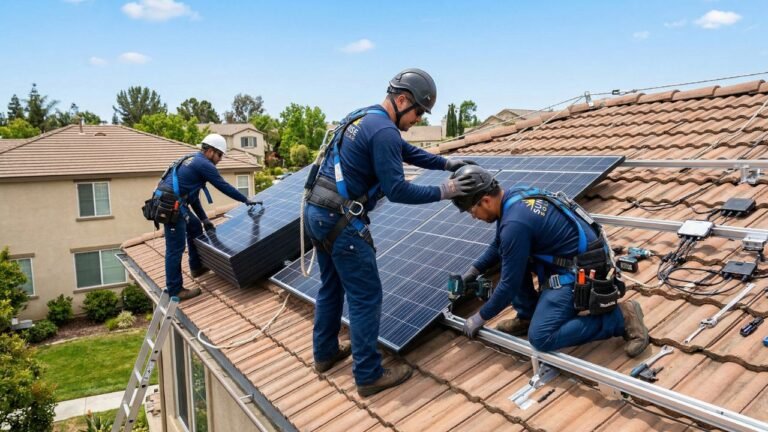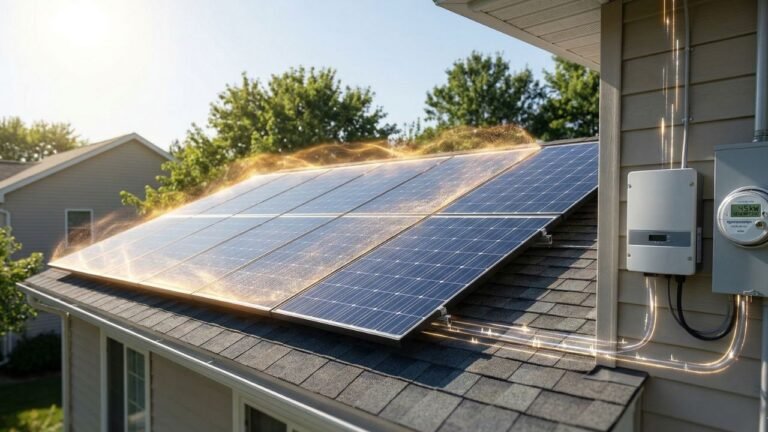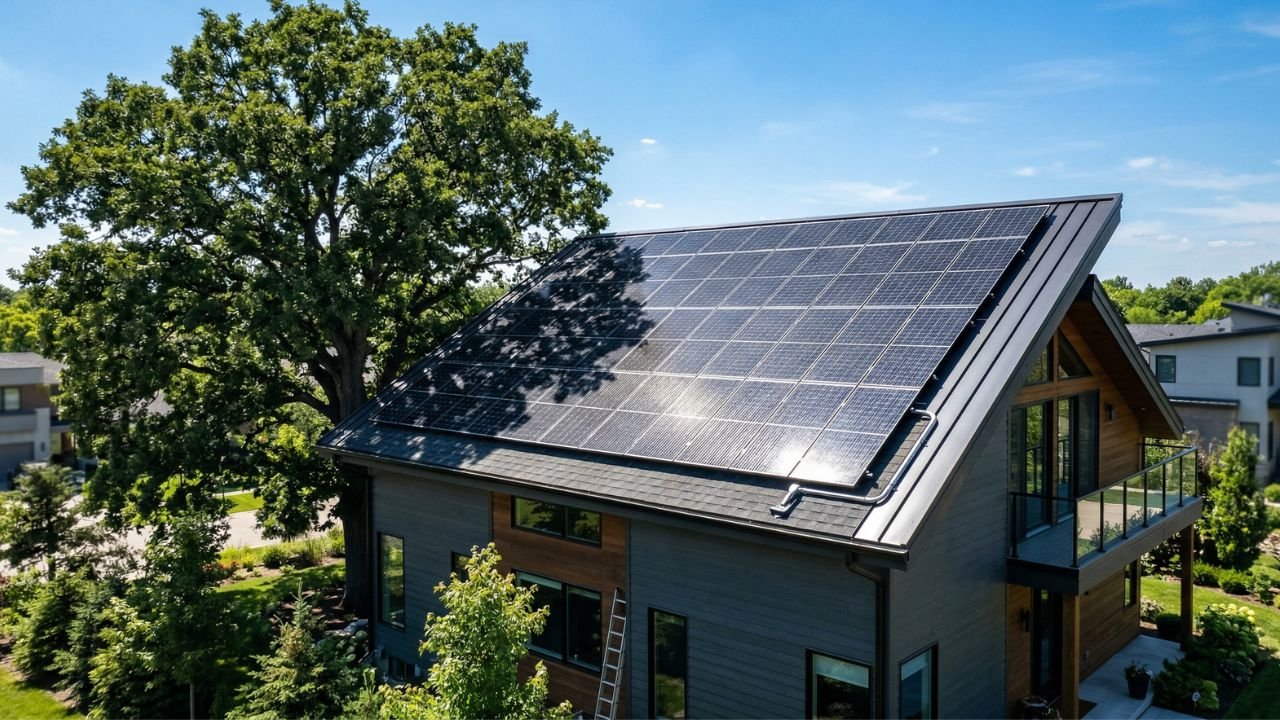
Do Solar Panels Work in the Shade?

If you’re asking do solar panels work in the shade, you’re asking one of the smartest questions in residential solar installation. The short answer is yes, they do work, but not at full power.
Shade from trees, chimneys, or nearby buildings can cut output, yet modern tech makes it way less of an issue than it was even a few years ago.
At Solar Panel Insights, we hear this question from folks just like you every week. Your neighbor might have mentioned their system still saves big on bills even with some afternoon shade.
Let’s clear up the myths and give you the real scoop so you can decide if solar fits your yard.
Many homeowners picture perfect, sunny roofs when they dream about going solar. But life isn’t always that simple. A tall oak tree or a neighbor’s roofline can cast shadows. Does that mean you should scrap the idea?
Not at all. We’ll break down exactly how shade hits solar panel efficiency, what your options are, and how to still score serious solar energy savings.
How Shade Really Impacts Solar Panel Performance
Shade doesn’t shut your system down completely, but it does reduce how much electricity your panels produce. Think of it like this: solar panels need photons from sunlight to create power. Even partial shade blocks some of those photons.
On a clear day, full sun might give you peak output. Add some shade, and you could see 20% to 50% less energy, depending on how much is covered.
The key is understanding partial shade versus full shade. A little dappled light from leaves in the morning? Your system keeps humming along nicely.
But a solid shadow across several panels in the afternoon? That’s when things dip more. The good news is 2026 panels come with built-in features that minimize the hit.
Now, let’s dive into the details that matter for your home.
What Happens When Panels Get Partial Shade
Partial shade is the most common scenario for homeowners. Maybe your roof gets morning sun but loses it by 3 p.m. to a nearby tree. In this case, your solar panels still work in the shade, just at a lower level.
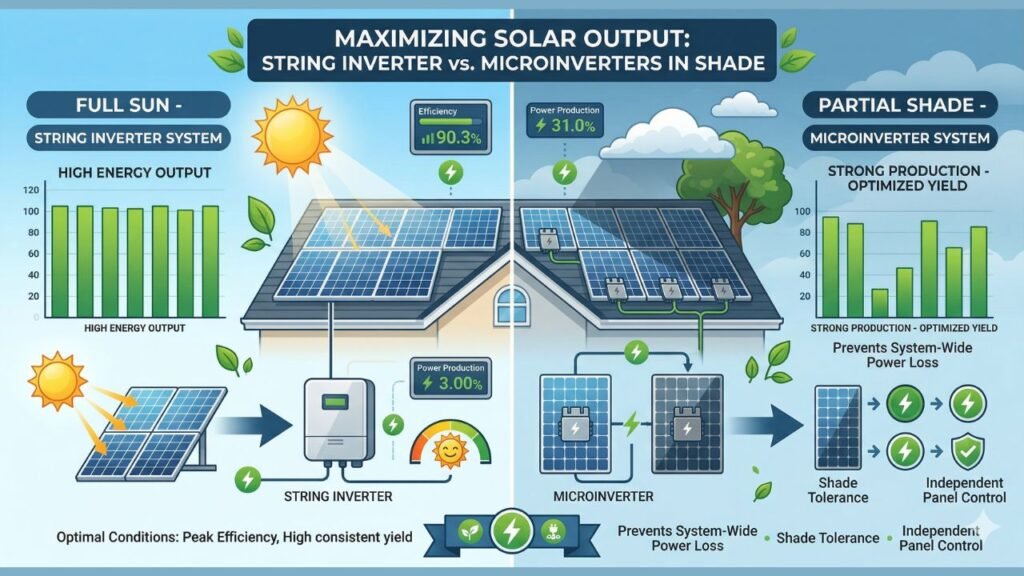
Older string inverter systems could lose big chunks of power because panels are wired in a chain. One shaded panel drags down the whole string.
But here’s where things get exciting. Most new residential solar installation setups use bypass diodes. These little heroes reroute power around shaded cells so the rest of the panel keeps producing.
Add microinverters or power optimizers, and each panel works independently. One shaded spot barely affects the others. It’s like having 20 mini power plants instead of one big chain.
I chatted with a family last year who worried about shade from their neighbor’s tall fence. They went with microinverters anyway. Their system still delivers 85% of expected output on partly cloudy days.
Real stories like this show why asking do solar panels work in the shade leads to smarter choices.
Full Shade: The Limits and What to Expect
Full shade is tougher. If a panel is completely blocked all day, like under a thick canopy or behind a tall building, output drops close to zero for those hours. But even then, the system doesn’t quit entirely.
Panels in full shade generate a tiny bit from diffuse light on overcast days. And if only part of your array is shaded, the unshaded panels keep cranking out power.
The bottom line? No one installs a system expecting full shade all day. Installers use tools to map shade patterns across seasons. They design around it.
In 2026, with higher solar panel efficiency ratings up to 23%, even shaded setups produce more than older tech did in full sun just a decade ago.
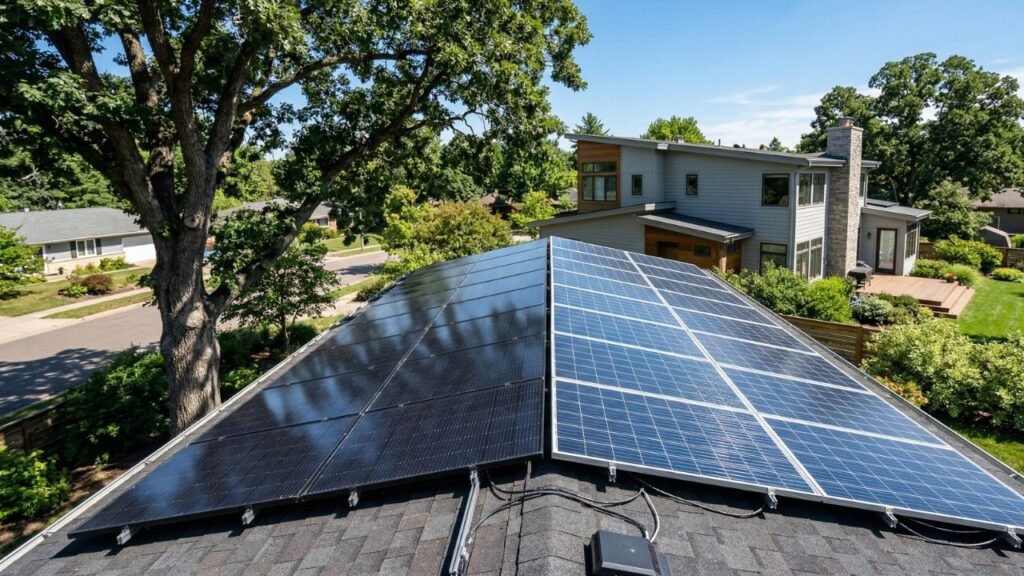
Smart Tech That Helps Panels Thrive in Shaded Spots
The solar world has evolved fast. If shade is a concern for your roof, you have options that boost performance big time:
- Microinverters: Each panel gets its own inverter. Shade on one? The others don’t care. Great for complex roofs.
- Power optimizers: Similar idea, but they work with a central inverter. Still, they isolate shade issues panel by panel.
- Bypass diodes and half-cut cells: Built into most panels now, these slice production loss from shade by up to 50% compared to old designs.
- Bifacial panels: These catch light from the back too, so reflected light from your roof or ground helps in lighter shade.
Pair any of these with high-efficiency monocrystalline panels, and your system laughs at moderate shade.
Many installers now default to these for residential solar installation in tree-heavy neighborhoods. It means more solar energy savings even when the sun plays hide-and-seek.
How to Check Shade on Your Own Roof Before Installing
Don’t guess about shade. Use free tools to map it out. Apps like Google Sunroof or your installer’s drone survey show exactly where shadows fall month by month.
They factor in tree growth and sun angles across seasons. A good site assessment takes just an hour and saves headaches later.
If your roof has some shade but not total coverage, you’re probably fine. Installers can position panels to dodge the worst spots or suggest trimming a branch or two.
Pro tip: Aim for systems where no more than 10-15% of panels get regular shade. That keeps your payback period short, often under eight years with current incentives.
Here’s a quick comparison to put numbers on it:
| Shade Level | Expected Daily Output Drop | Best Tech Fix | Typical Solar Energy Savings Impact |
|---|---|---|---|
| Light (morning only) | 5-15% | Standard panels + diodes | Minimal – still 80%+ bill reduction |
| Moderate (afternoon) | 20-40% | Microinverters or optimizers | Solid 60-75% bill cut |
| Heavy (several hours) | 40-70% | Full optimizers + bifacial | 40-60% bill reduction with tweaks |
| Full day (rare) | 80-100% on shaded panels | Rethink layout or add ground mount | Avoid if possible |
These figures come from real 2026 field data across the US. They help you see why most shaded roofs still make financial sense.
Real-World Benefits: Why Shade Doesn’t Kill Your Solar Dream
Even with some shade, going solar pays off. Homeowners often see 40% to 70% drops in electric bills because unshaded hours deliver peak power.
Plus, excess energy credits via net metering add up. Over 25 years, that’s thousands in solar energy savings.
Shade also doesn’t hurt your warranty. Most panels carry 25-year performance guarantees, and modern systems handle variable light like champs.
One homeowner in Oregon told their shaded array paid for itself in seven years thanks to smart design. Now they power their whole home plus an EV on sunny stretches.
If your yard has trees, consider it a feature, not a flaw.
Smart layouts turn potential problems into minor blips. And with rising utility rates, any clean power you generate beats paying full price for grid electricity.
Tips to Maximize Output on Shaded Roofs
Ready to make shade work for you? Here are practical steps:
- Hire an installer who uses shade-mapping software from day one.
- Choose microinverters or optimizers for tricky roofs.
- Trim overhanging branches if your HOA or city allows.
- Explore ground-mounted arrays if your roof is a total no-go.
- Check for 2026 solar incentives that sweeten the deal on efficient setups.
These moves keep your residential solar installation humming and your savings flowing. For the latest on federal programs, peek at energy.gov or the Solar Energy Industries Association site for state-by-state rebates.
Common Myths About Solar Panels and Shade
Let’s bust a few quick ones.
Myth: Shade ruins the whole system. Nope – smart wiring stops that.
Myth: You need a perfectly clear roof. Not true, many successful installs handle 20% shade.
Myth: Shaded panels wear out faster. Actually, they run cooler and often last longer.
These myths stop too many folks from exploring solar. At Solar Panel Insights, we believe every roof deserves a fair look.
FAQs About Do Solar Panels Work in the Shade
Do solar panels work in complete shade all day long?
No, they produce almost nothing in full, constant shade because they need direct or strong diffuse light. But if only part of your array is shaded, the sunny panels keep generating power. Installers avoid full-shade layouts for this reason.
How much does partial shade reduce solar panel efficiency?
Partial shade can cut output by 20% to 50%, but microinverters or optimizers limit the loss to just the shaded area. High-efficiency panels in 2026 bounce back better than ever, keeping most of your solar energy savings intact.
Can I still get great solar energy savings with some shade on my roof?
Yes, absolutely. Many homeowners with moderate shade see 50% or more off their bills. A professional assessment finds the best panel placement and tech to maximize what you get from available sun.
You’ve got the full picture now on do solar panels work in the shade. The answer is a confident yes, especially with today’s tech making residential solar installation smarter than ever.
Shade might trim your peak output a bit, but it rarely kills the deal. If your roof has some shadows, don’t let that stop you from slashing bills and going green.
At Solar Panel Insights, we’re all about practical advice that fits real homes. Reach out to a local pro for a free shade analysis. Your future self, and your wallet, will thank you.
Disclaimer: The information provided by Solar Panel Insights is for educational purposes only and should not replace professional advice from licensed solar installers or financial advisors. Performance in shade varies by location, system design, and local conditions. Always verify details with qualified experts in your area.